Caring Through Dementia Caregiver Resource Center
Welcome,
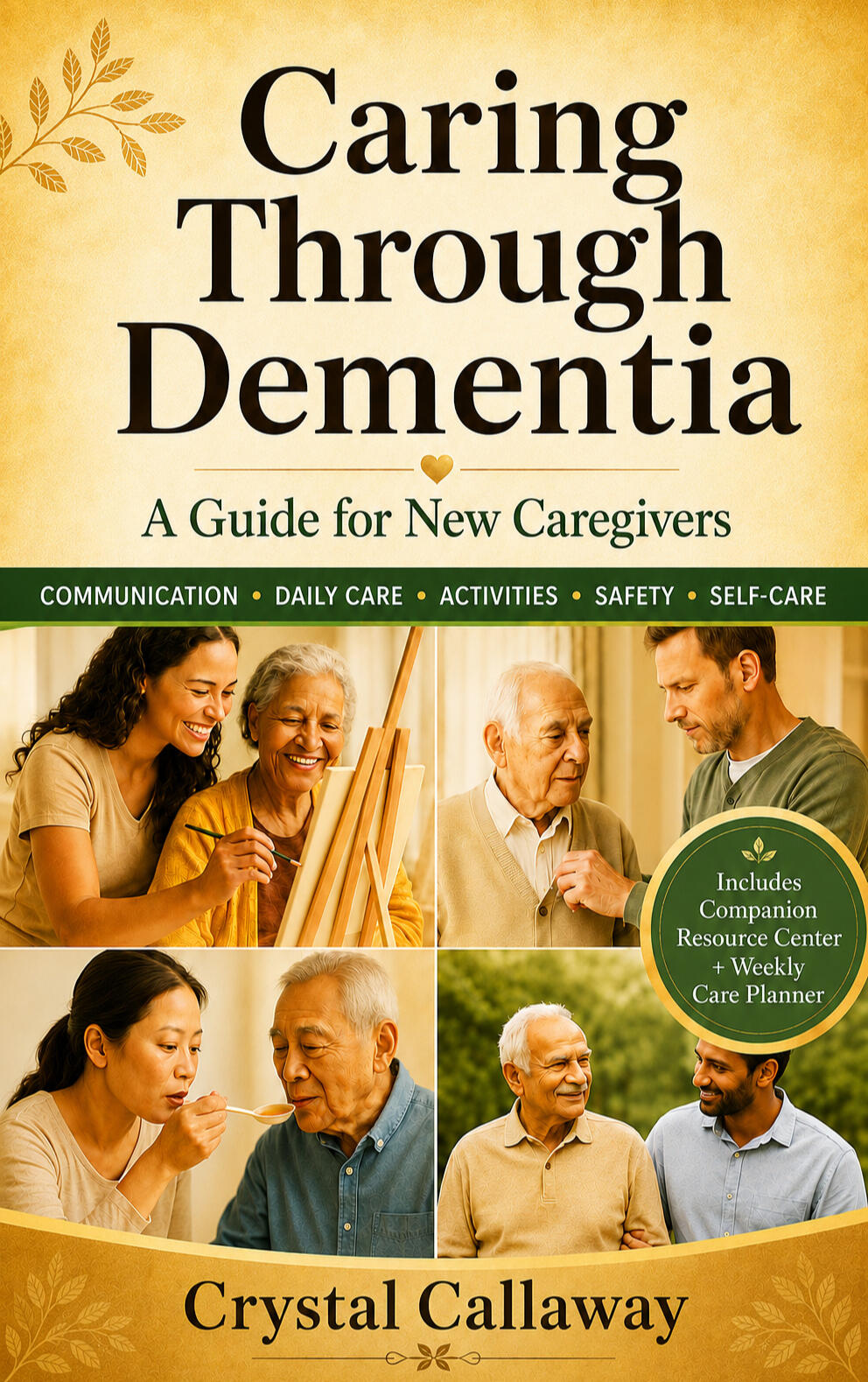
Caring for someone living with dementia can feel overwhelming, especially when changes happen quickly or you are unsure what to do next. The Caring Through Dementia Caregiver Resource Center was created to give caregivers a clear place to begin and practical guidance they can return to whenever they need it.This resource is a companion to Caring Through Dementia: The Caregiver Guide. It does not replace the detailed information in the book. Instead, it provides brief reminders, simple caregiving steps, and direction for some of the situations caregivers commonly face.You do not have to understand everything or solve every problem at once. Begin with the most immediate need, take one step at a time, and remember that caregiving is a process of learning, adjusting, and responding to change.
Download the PDF planner.Type directly into the white boxes, and save a new copy for each week.
Choose the Support You Need:
Select a topic below to go directly to the guidance that will be most useful to you.
Beginning Your Caregiver Journey
The caregiving journey may begin after a diagnosis, a hospitalization, noticeable memory changes, or the realization that someone can no longer manage safely without assistance. Regardless of how the journey begins, your first responsibility is not to have every answer. Your first responsibility is to understand what is happening and identify what needs attention now.
Start with These Essential Steps
1. Learn what the person can still do.
Do not focus only on what has been lost. Pay attention to the tasks, routines, interests, choices, and personal abilities the person still maintains. Encourage safe independence whenever possible.2. Identify the most immediate concerns.
Consider whether there are current concerns involving:
- Medication management
- Cooking or household safety
- Wandering or getting lost
- Driving
- Falls or mobility
- Personal hygiene
- Eating and drinking
- Bills, banking, or financial decisions
- Missed medical appointments
Increased confusion, fear, or agitation
Address urgent safety concerns first. Other changes can be handled gradually.3. Gather important information in one place.
Create a caregiver notebook, folder, or secure digital record containing:
- Current medications
- Medical conditions
- Doctors and healthcare providers
- Insurance information
- Emergency contacts
- Allergies
- Recent hospitalizations
- Legal and financial documents
- Daily routines and preferences
- Changes you have observed
This information can help during appointments, emergencies, and conversations with other family members or care providers.4. Begin observing patterns.
Keep brief notes about changes in memory, behavior, sleep, appetite, mobility, communication, and personal care. Include what happened before a difficult situation, how the person responded, and what helped calm or redirect them.
Patterns can reveal whether a problem may be connected to fatigue, hunger, pain, noise, unfamiliar surroundings, medication, frustration, or changes in routine.5. Decide who will be part of the caregiving team.
Caregiving should not automatically become the responsibility of one person. Identify relatives, friends, neighbors, healthcare professionals, faith-community members, or paid caregivers who may be able to assist.
Help can include transportation, meals, errands, companionship, appointment support, paperwork, supervision, or giving the primary caregiver time to rest.6. Have important conversations early.
When the person can still participate in decisions, discuss their wishes regarding:
Medical care
- Living arrangements
- Finances
- Transportation
- Personal routines
- Emergency planning
- Legal decision-making
-The people they trust to assist them
Early conversations allow the person living with dementia to remain involved in decisions that affect their life.7. Create a simple plan for the next 30 days.
Do not attempt to plan the entire caregiving journey immediately. Choose a few realistic priorities, such as scheduling a medical appointment, organizing medications, improving home safety, arranging transportation, or asking another person to help with one regular responsibility.
Your Beginning Caregiver list
Before moving forward, try to complete the following:
- Write down the three most urgent concerns.
- Make a current medication list.
- Gather medical and insurance information.
- Identify at least one person who can assist.
- Schedule any needed medical follow-up.
- Begin recording important changes.
- Choose one home-safety improvement.
- Set aside regular time for your own rest.You do not need to complete everything immediately. Begin with the item that will provide the greatest safety, stability, or relief.
Making Daily Care More Manageable
Daily caregiving often becomes easier when routines are simple, expectations are realistic, and the environment supports the person’s remaining abilities. The goal is not to make every day perfect. It is to reduce unnecessary stress and help both the caregiver and the person living with dementia move through the day with greater comfort and stability.
1. Keep routines familiar and predictable
Try to keep waking, meals, personal care, medications, activities, and bedtime at similar times each day. Familiar routines can reduce confusion and help the person feel more secure.
2. Give one instruction at a time
Use short, clear sentences and allow extra time for the person to respond. Avoid giving several directions at once. Demonstrate the task or gently guide the person when words are not enough.
3. Offer simple choices
Limit choices to two clear options, such as two outfits or two meal selections. Too many choices can create confusion or frustration.
5. Break tasks into smaller steps
Instead of asking the person to complete an entire activity, guide them through one part at a time. For example, during dressing, offer one item of clothing at a time.
6. Focus on comfort, not perfection
A task does not always need to be completed exactly as it once was. Adjust expectations and accept a simpler result when the person is safe, comfortable, and involved.
7. Reduce unnecessary distractions
Turn down the television, limit background noise, and keep the area uncluttered during meals, conversations, and personal care. A calmer setting can make it easier for the person to focus.
8. Notice what makes the day easier
Pay attention to the times, routines, music, foods, activities, and approaches that help the person feel calm and cooperative. Repeat what works and adjust what regularly causes distress.
Responding to Confusion, Resistance, & Distress
Pause before reacting
Dementia can affect how a person understands situations, communicates needs, and responds to assistance. Confusion, refusal, repetition, fear, or agitation may be signs that the person is uncomfortable or unable to explain what they need. A calm response can prevent the situation from becoming more distressing.Lower your voice, slow your movements, and give the person space. Arguing, correcting, or responding with frustration may increase fear or resistance.2. Look for the unmet need
Consider whether the person may be tired, hungry, thirsty, in pain, too hot or cold, overstimulated, frightened, or in need of the bathroom. Behavior is often a form of communication.3. Respond to the feeling
The person’s understanding of the situation may be inaccurate, but the emotion they are experiencing is real. Acknowledge the fear, sadness, anger, or worry before attempting to reassure or redirect them.4. Avoid arguing or repeatedly correcting
Do not try to prove that the person is mistaken. Briefly reassure them, acknowledge their concern, and guide the conversation toward something calming or familiar.5. Redirect gently
Offer a familiar activity, music, a snack, a different room, or a brief walk. Redirection may work better than continuing to discuss a situation the person cannot understand or remember.6. Pause and try again later
When a nonurgent task causes resistance, stop and allow the person time to settle. Return later using a calmer approach, simpler instructions, or a different caregiver when possible.7. Take sudden changes seriously
A sudden or unusually severe change in confusion, mood, or behavior may be connected to pain, illness, infection, dehydration, or medication effects. Contact a healthcare professional for an evaluation rather than assuming the change is simply part of dementia.
Creating a Safer Home and Planning Ahead
Dementia can affect judgment, balance, orientation, and the ability to recognize hazards. A home that was once safe may need gradual changes as the person’s abilities change. Regular safety checks and early planning can help prevent injuries and prepare the caregiver for future needs.1. Review the home room by room
Look for loose rugs, cluttered pathways, poor lighting, exposed cords, unstable furniture, and other hazards. Keep frequently used areas clear and consider handrails, grab bars, nonslip surfaces, and night-lights where needed.2. Secure potentially dangerous items
Store medications, cleaning products, tools, sharp objects, matches, and other hazardous items in secure locations. Check appliances and consider additional safety controls if cooking becomes unsafe.3. Prepare for wandering or getting lost
Keep a recent photograph available and make sure the person carries identification or wears an identification bracelet. Consider door alerts or other safeguards while still maintaining safe emergency exits.4. Reassess driving and transportation
Watch for missed turns, unexplained vehicle damage, confusion in familiar areas, delayed reactions, or unsafe decisions. Begin discussing alternative transportation before an emergency forces an immediate change.5. Keep emergency information ready
Maintain an updated list of medications, medical conditions, healthcare providers, emergency contacts, insurance information, and the person’s dementia diagnosis. Keep one copy accessible at home and another available when traveling.
Caring for Yourself While Caring for Someone Else
Caregiving can gradually affect your physical health, emotional well-being, sleep, relationships, and ability to manage daily responsibilities. Caring for yourself is not separate from caregiving. It helps you remain able to provide care without completely exhausting yourself.1. Pay attention to your own warning signs
Notice ongoing exhaustion, irritability, sleep changes, anxiety, difficulty concentrating, withdrawal from others, or feeling unable to cope. These may indicate that caregiving stress is becoming too difficult to manage alone.2. Take small breaks before you reach a crisis
Rest does not always require an entire day away. A quiet meal, brief walk, bath, music, prayer, conversation with a friend, or time spent on an enjoyable activity can provide needed relief.3. Ask for specific help
Instead of asking someone to “help more,” request a clear task. Ask them to bring a meal, stay with the person for an hour, provide transportation, make a telephone call, pick up medication, or complete an errand.4. Protect your basic health needs
Keep your own medical appointments, take prescribed medications, eat regularly, rest when possible, and make time for movement or fresh air. Do not postpone every personal need because someone else requires care.5. Consider respite and caregiver support
Help may come from relatives, friends, faith communities, support groups, adult-day services, in-home caregivers, or respite-care programs. Dementia care frequently becomes more than one person can reasonably provide alone.6. Speak with a professional when stress persists
Contact your healthcare provider, counselor, social worker, or another qualified professional when stress, anxiety, sadness, anger, or exhaustion regularly interferes with your health or ability to function.7. Release the expectation of perfection
Some days will be difficult even when you are doing everything you can. Needing assistance, feeling tired, or becoming frustrated does not mean you have failed. Focus on providing safe and compassionate care rather than trying to manage everything perfectly.
Knowing When More Help Is Needed
Dementia care usually changes over time. Assistance that was adequate several months ago may no longer meet the person’s needs. Recognizing when the current arrangement is becoming unsafe or unmanageable allows you to seek help before a crisis occurs. Dementia symptoms generally progress, and the person may gradually require more supervision and hands-on care.1. Daily care is becoming unsafe for one person
More help may be needed when one caregiver can no longer safely manage medications, meals, bathing, toileting, mobility, supervision, appointments, or nighttime needs.2. Safety concerns are increasing
Frequent falls, wandering, unsafe cooking, driving concerns, leaving doors open, medication mistakes, aggression, or repeated emergencies are signs that the current care arrangement should be reassessed.3. The person’s personal needs are not being consistently met
Notice recurring problems with eating, drinking, hygiene, clean clothing, medical care, continence, sleep, or taking medication correctly. These difficulties may indicate that more frequent or specialized assistance is needed.4. The caregiver’s health is declining
Persistent exhaustion, illness, anxiety, depression, missed medical appointments, loss of sleep, or feeling unable to continue safely are valid reasons to seek additional support. Caregiving stress can affect both the caregiver’s health and the care they are able to provide.5. Consider the next level of support
Possible assistance may include help from family, in-home care, respite services, adult-day programs, transportation, meal programs, a social worker, a geriatric care manager, assisted living, or memory care. Seeking additional care does not mean you have failed. It means the person’s needs have changed.6. Report sudden changes promptly
Sudden or severe confusion, agitation, weakness, loss of appetite, unusual sleepiness, pain, fever, falls, or a rapid decline should be reported to a healthcare professional. Illness, infection, dehydration, medication effects, or another medical problem can cause abrupt changes in a person living with dementia.7. Know when the situation is an emergency
Call 911 when there is immediate danger, serious injury, difficulty breathing, possible stroke symptoms, uncontrolled aggression, or a risk that someone may be harmed. Tell emergency responders that the person has dementia.
Trusted Resources
The following national organizations provide reliable dementia information, caregiver education, support, and assistance locating services. External links will open in a separate browser tab.
The toolkit contains caregiver information and links to federal, national, and local support resources.
National Institute on Aging Caregiving Toolkit
Eldercare Locator — Find Local Services
Alzheimer’s Association Caregiver Support
Help by Telephone
Alzheimer’s Association 24/7 Helpline: 800-272-3900
Eldercare Locator: 800-677-1116
Important Notice
The information provided in the Caring Through Dementia Caregiver Resource Center is for general educational and caregiver-support purposes only. It is not medical, legal, financial, mental-health, or emergency advice and does not replace guidance from qualified professionals.Contact an appropriate healthcare professional about changes in health, medication, behavior, mobility, eating, drinking, or safety. Call 911 or your local emergency service when someone is in immediate danger or experiencing a medical emergency.Links to outside organizations are provided as informational resources. Caring Through Dementia does not control or guarantee the content, availability, services, or advice provided by external organizations.